
Last Updated on September 15, 2026 by andrewshih
The PMP® exam was updated in July 2026 to better reflect how project management is practiced today. If you are preparing for the current PMP exam, understanding the latest Exam Content Outline, domain emphasis, and question formats will help you study smarter, avoid surprises on exam day, and align your preparation with what PMI actually tests.
In this article, we will break down:
- Why PMI updated the PMP Exam Content Outline (ECO)
- The key differences between the 2021 and 2026 ECOs
- What has changed in domain weighting, topics, and question formats
- How students should adjust their study strategy for the 2026 PMP exam
- Why PMI Updated the PMP Exam Again
- Summary of Key Differences: PMP ECO 2021 vs 2026
- What Changed in Each PMP Exam Domain
- Agile, Predictive, and Hybrid Approaches: What’s Different Now
- Emphasis Shift in the PMP Exam (2026)
- New PMP Exam Question Types You Must Prepare For (2026)
- How Students Should Prepare for the 2026 PMP Exam
Why PMI Updated the PMP Exam Again
PMI updates the PMP exam based on a global Job Task Analysis (JTA). The goal is simple: ensure the exam reflects what project managers actually do on the job today—not what they did 10 or 15 years ago.
Since the 2021 update, several trends have accelerated:
- Projects are increasingly evaluated based on value delivery, not just scope, schedule, and cost
- Organizations expect project managers to navigate governance, compliance, and external environments
- Agile and hybrid ways of working are now dominant in many industries
- Emerging topics like artificial intelligence (AI) and sustainability are influencing decision-making
The 2026 ECO reflects these realities and signals a shift in what PMI considers “project success.”
Summary of Key Differences: PMP ECO 2021 vs 2026
| Aspects | 2021 ECO | 2026 ECO |
|---|---|---|
| Domains | 3 Domains: • People (42%) • Process (50%) • Business Environment (8%) | 3 Domains: • People (33%) • Process (41%) • Business Environment (26%) |
| Emphasis Shift | Strong focus on Agile/Hybrid integration across domains (50% predictive, 50% agile/hybrid) | Increased focus on Business Environment, with growing emphasis on sustainability, AI, and value delivery. Breakdown: ~40% predictive, ~60% agile/hybrid/adaptive |
| New/Updated Topics | No AI, sustainability, or enhanced scenario-based emphasis explicitly included. | Introduces emerging trends such as: • Artificial Intelligence (AI) • Sustainability • Enhanced scenario-based questions • Value-based delivery |
| Tasks and Enablers | Tasks & Enablers detailed under each domain; focused on traditional and agile roles. | Refined tasks/enablers with greater emphasis on stakeholder alignment, governance, external influences, and value realization. Aligns with PMI’s “Maximizing Project Success” framework. |
| Exam Question Types | • Multiple Choice • Multiple Response • Drag & Drop • Matching | Expanded item types: • Case/Scenario-based questions (NEW) • Graphic-based questions (NEW) • Point & Click (NEW) • Pull-down lists |
| Exam Time | 180 Questions in 230 mins (5 pretest questions) | 180 Questions in 240 mins (10 pretest questions). Includes case-based and hands-on questions |
| Compliance, Governance & Environment | Less emphasized; part of Business Environment domain (8%) | Significantly expanded coverage in the Business Environment domain (26%), including compliance, governance, external environment analysis, and organizational change |
PMP Exam Time and Question Breakdown
Understanding the exam format is just as important as knowing the content.
| Exam Element | 2021 PMP Exam | 2026 PMP Exam |
|---|---|---|
| Total Questions | 180 | 180 |
| Scored Questions | 175 | 170 |
| Pretest (Unscored) Questions | 5 | 10 |
| Total Exam Time | 230 minutes | 240 minutes |
| Breaks | Two 10-minute breaks | Two 10-minute breaks |
The increase in pretest questions means candidates may encounter more experimental or unfamiliar question styles.
In the 2026 exam, some questions are grouped into case or scenario sections, where multiple questions are based on the same project context. Once you move past a case section, you cannot return to it.
Time management and reading discipline are now critical exam skills.
What Changed in Each PMP Exam Domain
At a glance, both exams still use three domains: People, Process, and Business Environment. However, the emphasis and intent behind these domains have changed significantly.
The most important takeaway here is the dramatic expansion of the Business Environment domain, from a minor role to more than a quarter of the exam.
People Domain (33%): From Team Skills to Stakeholder Alignment
In the 2021 ECO, the People domain focused heavily on leadership skills such as:
- Conflict management
- Team motivation
- Emotional intelligence
- Servant leadership
These topics still matter, but in the 2026 ECO the focus is narrower and more outcome-oriented. The People domain now emphasizes:
- Developing and maintaining a shared vision
- Aligning and managing stakeholder expectations
- Communication strategies tied to governance and reporting
- Knowledge transfer and organizational learning
What this means: You should expect fewer questions that test leadership concepts in isolation and more questions that ask how a project manager aligns people, expectations, and outcomes within a larger organizational context.
Process Domain (41%): From Execution to Value-Based Delivery
The Process domain remains the largest domain, but its role has evolved.
In the 2021 exam, Process focused on execution mechanics:
- Schedule, cost, scope, and quality management
- Risk and procurement
- Change control and closure
The 2026 ECO still includes these fundamentals, but reframes them around value delivery and decision-making. New or expanded themes include:
- Value-based prioritization
- Incremental delivery of benefits
- Financial planning and reserves
- Sustainability and cost of quality
- Integrated planning across governance boundaries
In other words, PMI is less interested in whether you can recite tools and more interested in whether you can choose the right action in a realistic scenario.
Business Environment Domain (26%): The Biggest Shift
This is the most important change in the 2026 PMP exam.
In 2021, Business Environment accounted for only 8% of the exam and covered topics like:
- Compliance
- Benefits realization
- External environmental changes
In 2026, this domain expands to 26% and includes:
- Governance structures and escalation paths
- Compliance, sustainability, and regulatory requirements
- Risk management tied to external threats (e.g., cybersecurity, AI risks)
- Change control at the organizational level
- Continuous improvement and organizational change
This signals a clear message from PMI: Project managers are expected to operate as business leaders, not just delivery managers.
Agile, Predictive, and Hybrid Approaches: What’s Different Now
The 2021 exam aimed for roughly a 50/50 split between predictive and agile/hybrid approaches.
The 2026 exam shifts that balance:
- ~40% predictive
- ~60% agile, hybrid, or adaptive
More importantly, methodologies are no longer tested as labels. Instead, PMI expects you to:
- Identify the environment
- Understand constraints and governance
- Select actions that fit the context
Memorizing frameworks without understanding why they are used will not be enough.
Emphasis Shift in the PMP Exam (2026)
Beyond domain weighting, the 2026 PMP exam reflects a clear shift in professional expectations. PMI is signaling that project managers are no longer evaluated only on delivery mechanics, but on how well they operate within complex, fast-changing environments.
Increased Focus on Artificial Intelligence (AI)
While the PMP exam does not test technical AI implementation, it does expect project managers to:
- Understand how AI can influence decision-making, automation, and data analysis
- Recognize risks related to AI adoption (ethics, data privacy, bias, governance)
- Evaluate AI-driven solutions as part of broader delivery and business strategy
Expect scenario-based questions where AI is part of the context—not the subject—to test judgment and governance.
Sustainability and Responsible Delivery
Sustainability is now explicitly referenced in the 2026 ECO. This includes:
- Environmental and social considerations
- Sustainable procurement and quality decisions
- Long-term value versus short-term gains
Students should be prepared to choose options that balance cost, compliance, and sustainability when trade-offs appear.
Stronger Emphasis on Value Delivery
PMI continues to move away from success defined solely by schedule and budget. The 2026 exam emphasizes:
- Benefits realization
- Outcome-based metrics
- Incremental and continuous value delivery
New PMP Exam Question Types You Must Prepare For (2026)
The 2026 PMP exam includes expanded question formats designed to assess a candidate’s ability to apply project management knowledge in realistic situations.
The exam consists of 180 questions and may include multiple-choice (single and multiple response), drag-and-drop, and practicum-style hands-on testing that involves tools, data, and case study questions.
In addition to traditional multiple-choice questions, candidates may encounter the following formats:
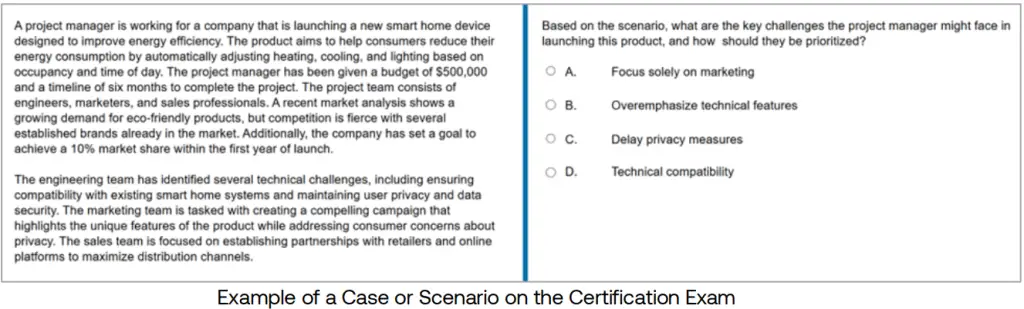
Case or Scenario (NEW)
A detailed scenario or situation is presented, which may include graphs, charts, dashboards, or other visuals. After reviewing the scenario, the candidate answers a series of related questions based on the information provided.
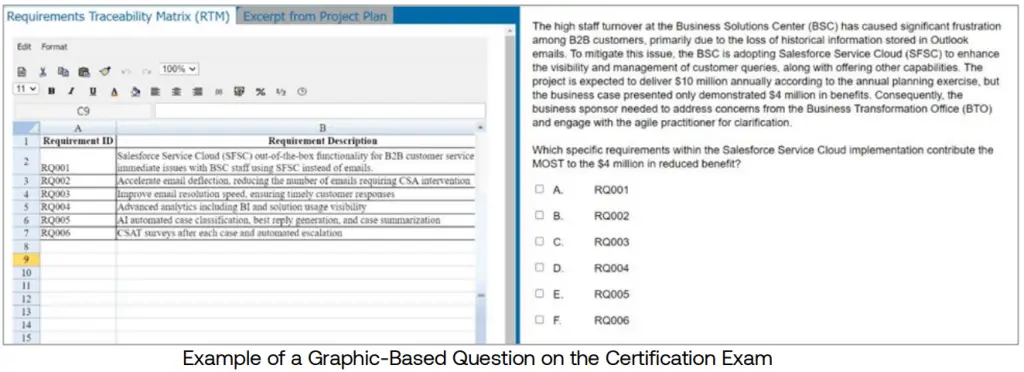
Graphic-Based Questions (NEW)
The candidate must interpret visual information such as charts, graphs, diagrams, tables, or images and answer questions based on that data.
Multiple-Choice (Single Response)
Multiple answer choices are provided with one correct answer.
Multiple-Response
Multiple answer choices are provided with more than one correct answer.
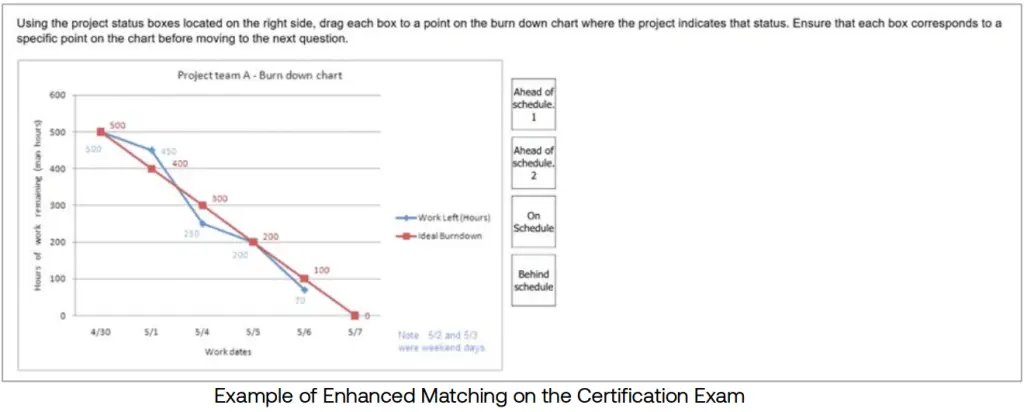
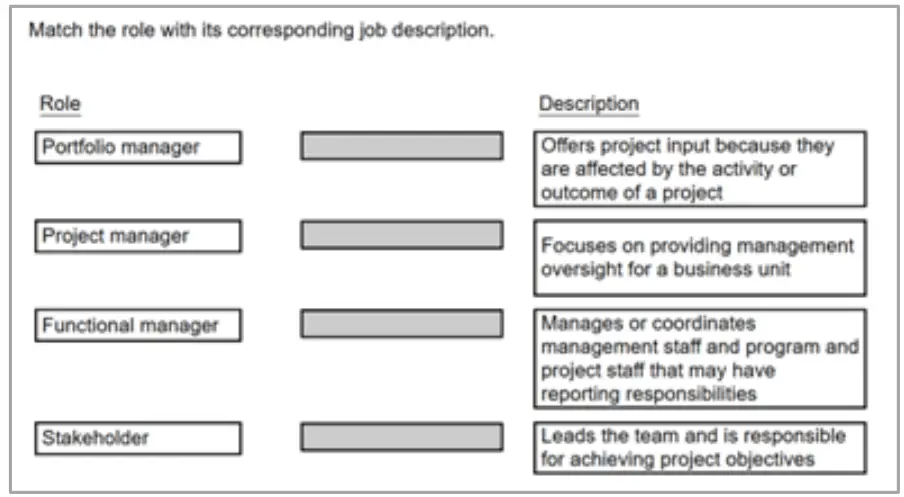
Enhanced Matching / Matching (CBT Only)
Candidates match items from different columns. Enhanced matching may include images, diagrams, or drag-and-drop functionality.
Point and Click (CBT Only)
An image is presented with selectable areas. The candidate identifies the correct location(s) by clicking on the appropriate area within the image.
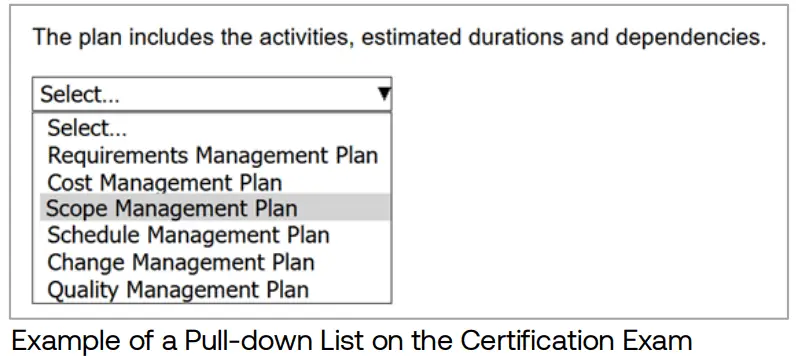
Pull-Down List (CBT Only)
The correct response is selected from a drop-down list within a sentence or scenario.
How Students Should Prepare for the 2026 PMP Exam
1. Shift from Memorization to Decision-Making
The exam increasingly tests what you would do next—not what a definition says. Study with the mindset of a practicing project manager, not a textbook reader.
2. Strengthen Business Environment Knowledge
Do not ignore governance, compliance, risk, and organizational change. These topics now carry significant weight and often appear in scenario-based questions.
3. Practice Interpreting Visual Information
Be comfortable reading:
- Requirements Traceability Matrices (RTMs)
- Burnup and burndown charts
- Schedules, dashboards, and reports
4. Use Exam-Style Practice Tools
Your practice platform should reflect the real exam experience. Tools like PMI Study Hall are valuable because they expose you to:
- Case-based questions
- Visual and interactive formats
- PMI-style wording and logic